The publication archive
The NorthPath Letter
Long-form strategic analysis of global businesses, capital markets, and the business of investing — written for the professional reader who wants structural understanding, not daily noise.
Subscribe — Free
Get every new essay delivered to your inbox.
All issues
All essays are journalism and education for a general professional readership. Nothing on this page is investment advice or a recommendation in respect of any specific financial instrument. Where individual securities are discussed, the author’s position is disclosed in the relevant essay in line with MAR Article 20.
- The Texas Sharpshooter Fallacy: Drawing the Target After the Shots, and Why the Long-Term Equity Investor Must Fix the Thesis Before the Data

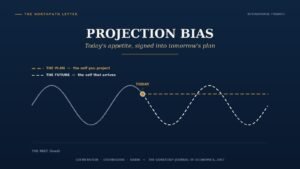
- Projection Bias: Loewenstein, O’Donoghue and Rabin’s 2003 Model of Why Today’s Appetite Writes Tomorrow’s Plan, and Why the Long-Term Equity Investor Should Decide in One Season for the Other
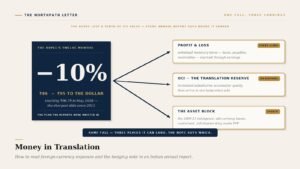
- Money in Translation: How to Read Foreign-Currency Exposure and the Hedging Note in an Indian Annual Report
- The Journey of One Dollar: What Profit Margins Tell You About the Quality of a Business

- The Overreaction Hypothesis: De Bondt and Thaler’s 1985 Discovery That Yesterday’s Losers Beat Yesterday’s Winners, and Why the Long-Term Equity Investor Should Distrust Prices Set at the Emotional Extremes

- The Shopkeeper’s Test: What Return on Equity Tells You About the Quality of a Business

- The Second Currency: How to Read Foreign-Exchange Exposure, Ind AS 21, and the Hedging Note in an Indian Annual Report

- The Decoy Effect: Huber, Payne and Puto’s 1982 Discovery That an Option Nobody Chooses Can Change the One You Do, and Why the Long-Term Equity Investor Should Distrust the Menu

- Bought, Not Paid: How to Read Trade Payables, MSME Dues and Supplier Finance in an Indian Annual Report

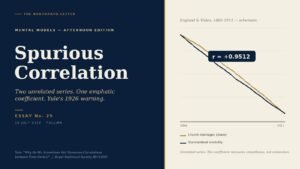
- Spurious Correlation: G. Udny Yule and the Nonsense-Correlations Problem (1926)
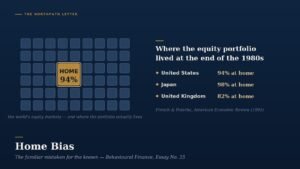
- Home Bias: French and Poterba’s 1991 Discovery That the World’s Investors Stay Home, and Why the Long-Term Equity Investor’s Map Must Be Larger Than His Address
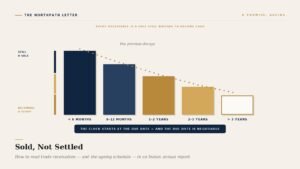
- Sold, Not Settled: How to Read Trade Receivables and the Ageing Schedule in an Indian Annual Report
- The Wisdom of Crowds: Francis Galton’s 1907 Vox Populi, and Why the Long-Term Equity Investor Should Respect the Market’s Verdict Before Betting Against It

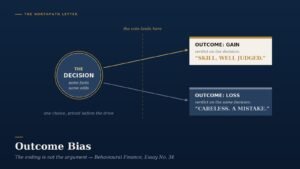
- Outcome Bias: Baron and Hershey’s 1988 Discovery That We Grade Decisions by Their Endings, and Why the Long-Term Equity Investor Must Judge the Process Before the Result
- The Three Shelves of Price: How to Read Fair Value and the Level 3 Note in an Indian Annual Report

- The St. Petersburg Paradox: Daniel Bernoulli’s 1738 Answer to an Infinite Expected Value, and Why the Long-Term Equity Investor Should Not Pay an Unbounded Price for an Unbounded Story

- The Disjunction Effect: Tversky and Shafir’s 1992 Discovery That Investors Defer Choices They Would Make Under Every Outcome, and Why the Long-Term Equity Investor Should Stop Waiting for the Fog to Clear

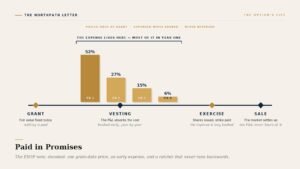
- Paid in Promises: How to Read the ESOP Note and Ind AS 102 in an Indian Annual Report
- The Ecological Fallacy: Robinson’s 1950 Warning That Group Averages Describe No One, and Why the Long-Term Equity Investor Cannot Buy GDP Growth

- Exponential-Growth Bias: Wagenaar and Sagaria’s 1975 Discovery and Why the Long-Term Equity Investor Cannot Trust a Linear Mind in a Compound World

- Correlation Is Not Causation: Austin Bradford Hill’s 1965 Nine Viewpoints, and Why the Long-Term Equity Investor Must Ask What Moves the Numbers Before Trusting What Moves Together

- Noise: Kahneman, Sibony and Sunstein’s 2021 Anatomy of Inconsistent Judgment, and Why the Long-Term Equity Investor Is Not the Same Investor Twice

- The Collateral Trail: How to Read the Borrowings Note, the Security Clause, and the Charge Registry in an Indian Annual Report

- Groupthink: Whyte’s 1952 Coinage, Janis’s 1972 Anatomy of the Unanimous Room, and Why the Long-Term Equity Investor Should Hear Easy Consensus as a Warning

- The Memory of a Price: How to Read Goodwill and the Impairment Test in an Indian Annual Report

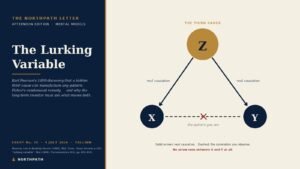
- The Lurking Variable: Karl Pearson’s 1899 Discovery That a Hidden Third Cause Can Manufacture Any Pattern, Fisher’s Randomised Remedy, and Why the Long-Term Equity Investor Must Ask What Moves Both
- The Beauty Contest: Keynes’s 1936 Game of Anticipating Average Opinion, Nagel’s 1995 Proof That Reasoning Stops Two Steps In, and Why the Long-Term Equity Investor Should Refuse to Play

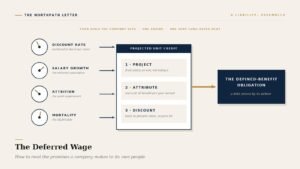
- The Deferred Wage: How to Read Gratuity, Pensions, and the Provident-Fund Guarantee in an Indian Annual Report
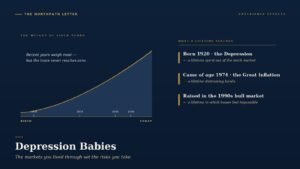
- Depression Babies: Malmendier and Nagel’s 2011 Discovery That the Markets You Lived Through Decide the Risks You Will Take, and Why the Long-Term Investor Must Study the Decades He Never Felt
- Assets in Waiting: How to Read Capital Work-in-Progress and Capitalised Interest in an Indian Annual Report

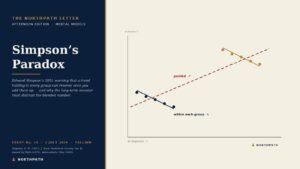
- Simpson’s Paradox: Edward Simpson’s 1951 Warning That a Trend Holding in Every Group Can Reverse Once You Add Them Up, and Why the Long-Term Equity Investor Must Distrust the Blended Number
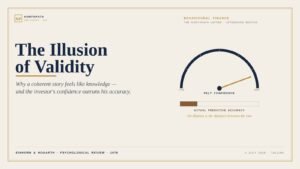
- The Illusion of Validity: Why a Coherent Story Feels Like Knowledge, and the Long-Term Equity Investor’s Confidence Outruns His Accuracy
- The Fourth Statement: How to Read the Statement of Changes in Equity and Other Comprehensive Income in an Indian Annual Report

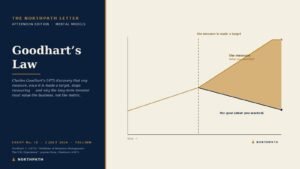
- Goodhart’s Law: Charles Goodhart’s 1975 Discovery That Any Measure, Once It Becomes a Target, Stops Measuring
- The Names You Already Know: Goldstein and Gigerenzer’s Recognition Heuristic, and Why a Familiar Company Is Not a Safe One

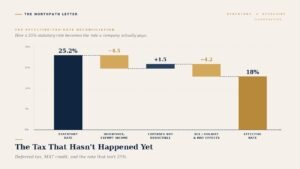
- The Tax That Hasn’t Happened Yet: Reading Deferred Tax, MAT Credit, and the Effective-Rate Reconciliation in an Indian Annual Report
- The End of Easy Generics: How Monopsony, Deflation, and the China Tether Are Forcing Indian Pharma Up the Value Chain

- The Path of Least Resistance: William Samuelson and Richard Zeckhauser’s 1988 Status Quo Bias, and Why the Long-Term Equity Investor Must Tell Patience From Paralysis

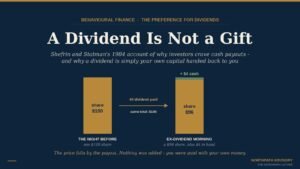
- A Dividend Is Not a Gift: Hersh Shefrin and Meir Statman’s 1984 Theory of Why Investors Crave Cash Payouts, and Why the Long-Term Owner Should Think in Total Return
- A Clean Opinion Is Not a Clean Bill of Health: How to Read the Independent Auditor’s Report in an Indian Annual Report

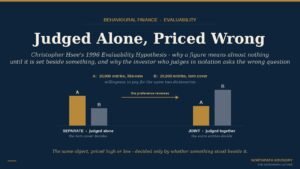
- Judged Alone, Priced Wrong: Christopher Hsee’s 1996 Evaluability Hypothesis, and Why the Investor Who Values a Business in Isolation Asks the Wrong Question
- Confidence and Prediction Intervals: Jerzy Neyman’s 1937 Distinction Between the Error in Your Estimate and the Spread of the Future, and Why the Long-Term Investor Must Price the Second, Not the First

- Ergodicity: George Birkhoff’s 1931 Theorem, the Difference Between the Average and the Path, and Why the Long-Term Investor Must Survive Every Draw

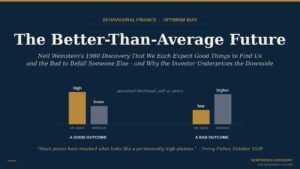
- Unrealistic Optimism: Neil Weinstein’s 1980 Discovery That We Each Expect a Better-Than-Average Future, and Why the Long-Term Equity Investor Systematically Underprices the Downside
- Markov Chains: Why the Future Depends Only on the Present

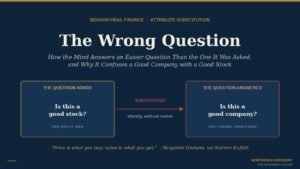
- The Wrong Question: Attribute Substitution and the Good-Company Trap
- The Monte Carlo Method: Stanisław Ulam’s 1946 Game of Solitaire, the Engine of Chance That Modelled the Bomb, and Why the Long-Term Investor Should Think in Distributions, Not Forecasts

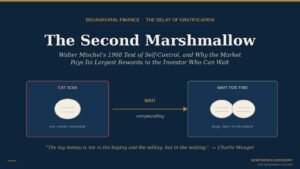
- The Second Marshmallow: Walter Mischel’s 1968 Test of Self-Control, and Why the Market Pays Its Largest Rewards to the Long-Term Investor Who Can Wait
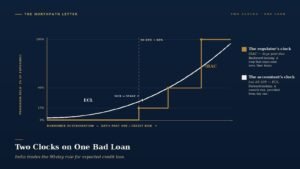
- Two Clocks on One Bad Loan: How India Is Trading the 90-Day Rule for Expected Credit Loss
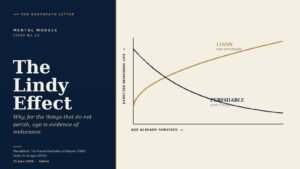
- The Lindy Effect: Benoît Mandelbrot’s Reversal of a 1964 Aphorism, Nassim Taleb’s 2012 Law of Survival, and Why for the Long-Term Equity Investor Age Can Be Evidence of Endurance