Latest Issues — Chronological
- Naive Diversification: Benartzi and Thaler’s 1/n Heuristic, and Why the Long-Term Equity Investor Should Never Let the Menu Choose His Portfolio
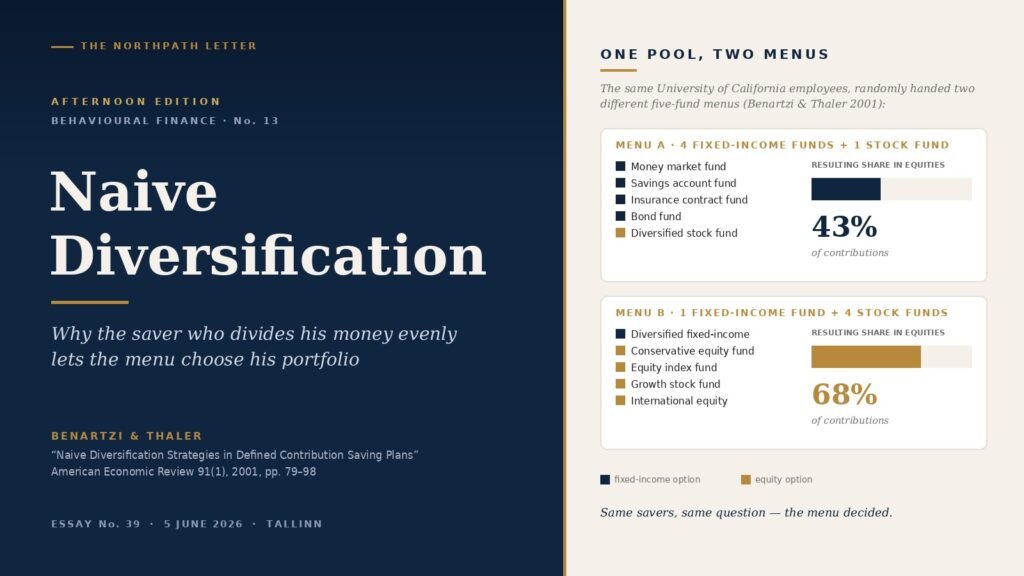 Benartzi and Thaler’s 2001 paper showed savers dividing money evenly across whatever menu they are handed — so the menu, not the saver, sets the risk. From Sweden’s 456-fund launch to Enron’s 62 per cent, the 1/n heuristic and the three disciplines that contain it.
 - The AAA That Wasn’t: A Retrospective on the IL&FS Group Failure
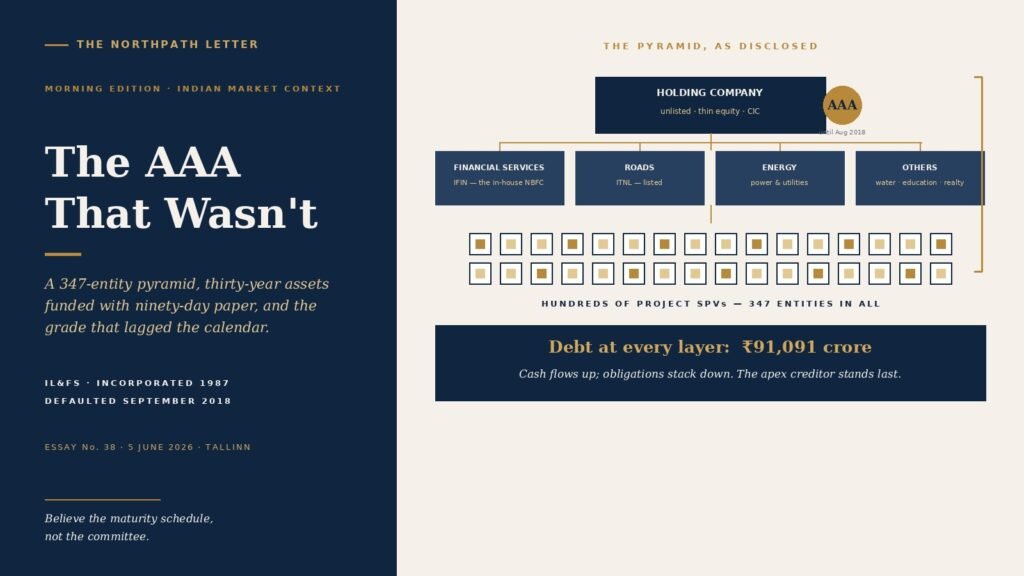 In September 2018, a 347-entity infrastructure group with ₹91,091 crore of debt travelled from AAA to D in roughly forty days. A retrospective on the IL&FS failure: the pyramid, the maturity mismatch, the ratings lag, the state’s response — and five disciplines for reading any Indian group balance sheet.
 - The Closet Indexer: Murray Stahl’s Critique, the Active-Share Evidence, and Why the Long-Term Equity Investor Should Refuse to Pay Active Fees for Index Exposure
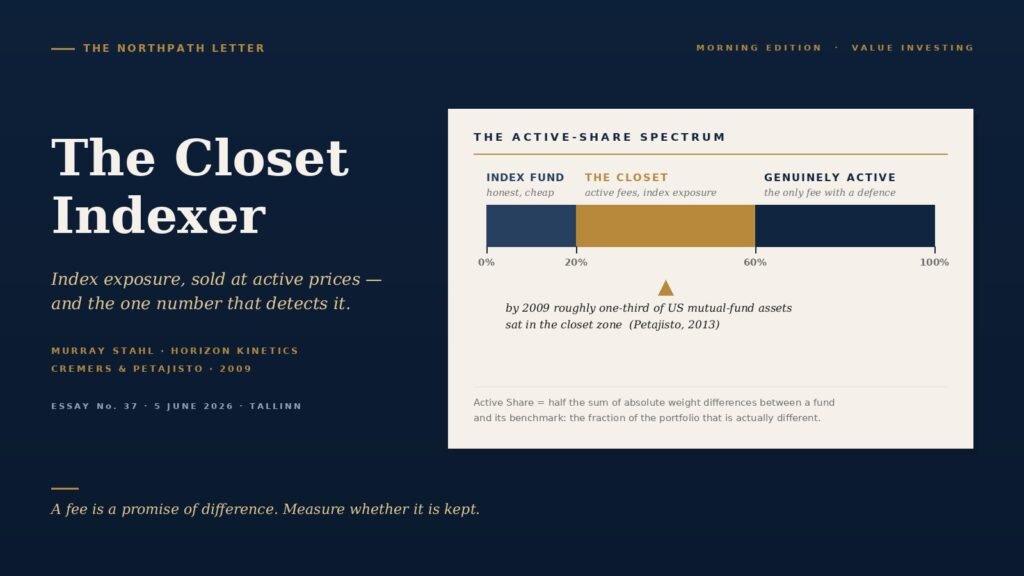 Closet indexers charge active fees for index exposure. Cremers and Petajisto’s Active Share exposed the practice; ESMA, the FCA and Norway’s Supreme Court confirmed it. The discipline: measure the difference you pay for — then differ deliberately or index honestly.
 - Stocks as Lotteries: Barberis and Huang’s 2008 Model of Skewness Preference, and Why the Long-Term Equity Investor Should Distrust the Long Shot
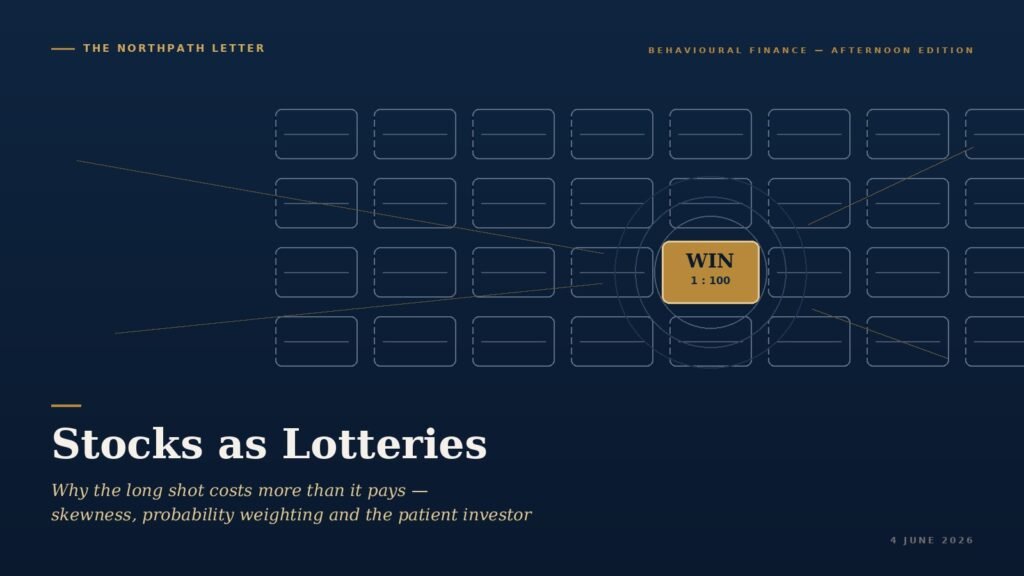 Barberis and Huang’s 2008 model showed why a small chance of a large gain commands more than it is worth. From China’s expiring put warrants to the F&O losses SEBI tallied, this essay traces the price of the long shot — and the three disciplines that contain it.
 - The Capex Mirror: India’s 2026 Investment Cycle and China’s 2003 Buildout
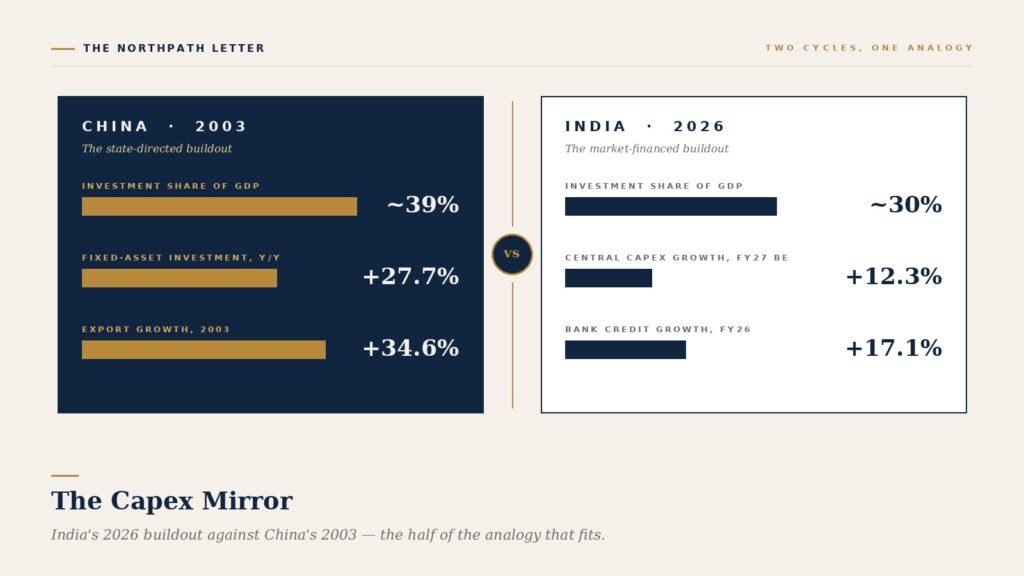 Strategy decks keep laying India’s 2026 investment cycle over China’s 2003 buildout. An audit of the analogy: where the rhyme is real, where it breaks, and the five disclosures that track the Indian cycle better than any chart of someone else’s miracle.
 - The Twelve Commandments: Philip Carret’s 1930 Code of Investor Conduct, and Why the Long-Term Equity Investor Still Needs Rules More Than Forecasts
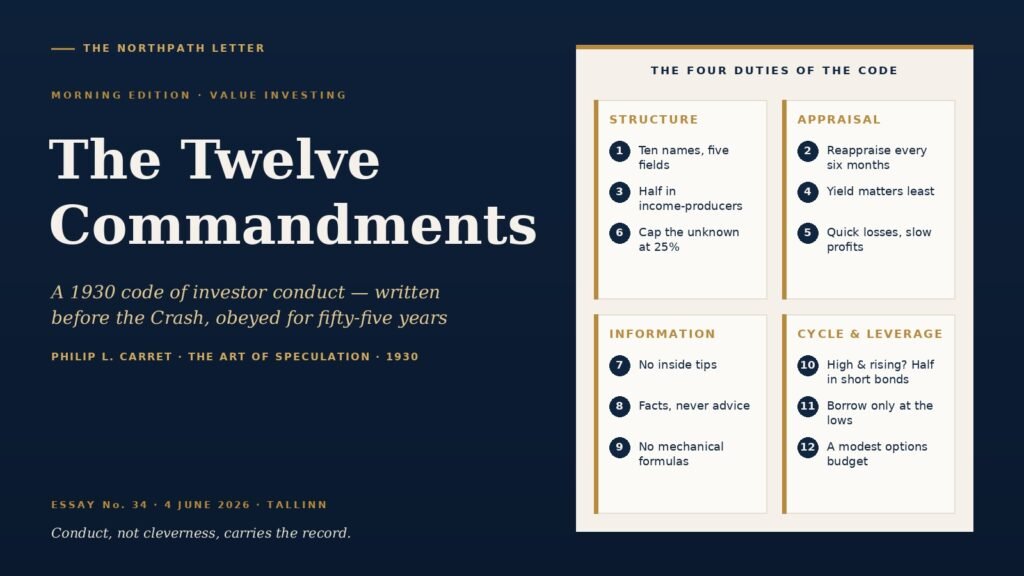 Philip Carret wrote twelve rules of investor conduct in 1930, then compounded the Pioneer Fund at roughly 13 per cent for 55 years. Why a written code of behaviour — not a valuation method — is the part of value investing that survives every market regime.
 - The Law of Small Numbers: Tversky and Kahneman’s 1971 Warning That Small Samples Exaggerate, and Why the Long-Term Equity Investor Should Distrust Short Track Records
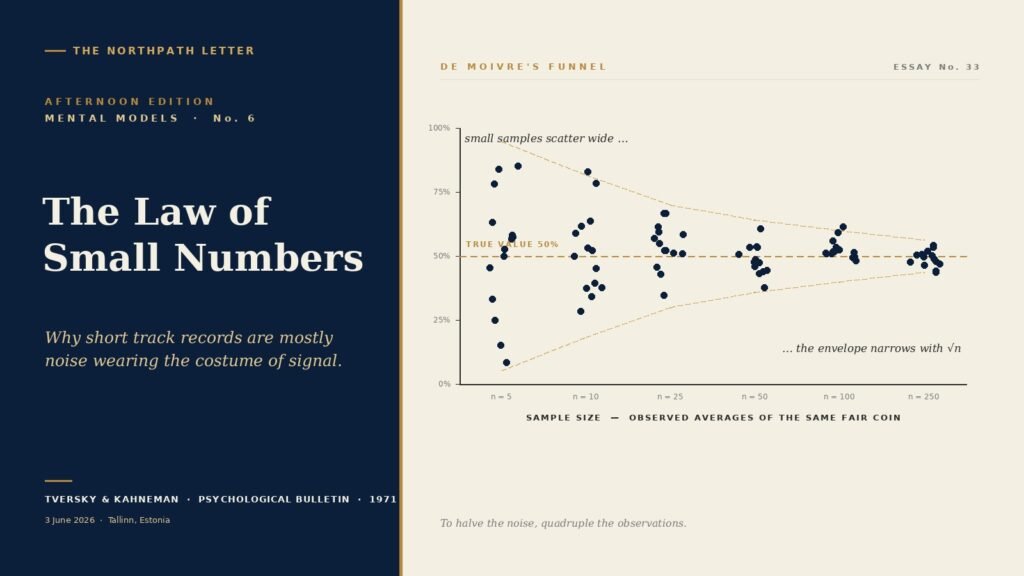 Intuition treats small samples as if they carried the authority of large ones. Tversky and Kahneman named the error in 1971; de Moivre priced it in 1730. From the Gates small-schools bet to a fifteen-year fund streak — why track records are judged by their denominator.
 - The Winner’s Curse: Capen, Clapp and Campbell’s 1971 Oil-Field Discovery and Why the Long-Term Equity Investor Should Distrust Any Prize Won by Outbidding the Field
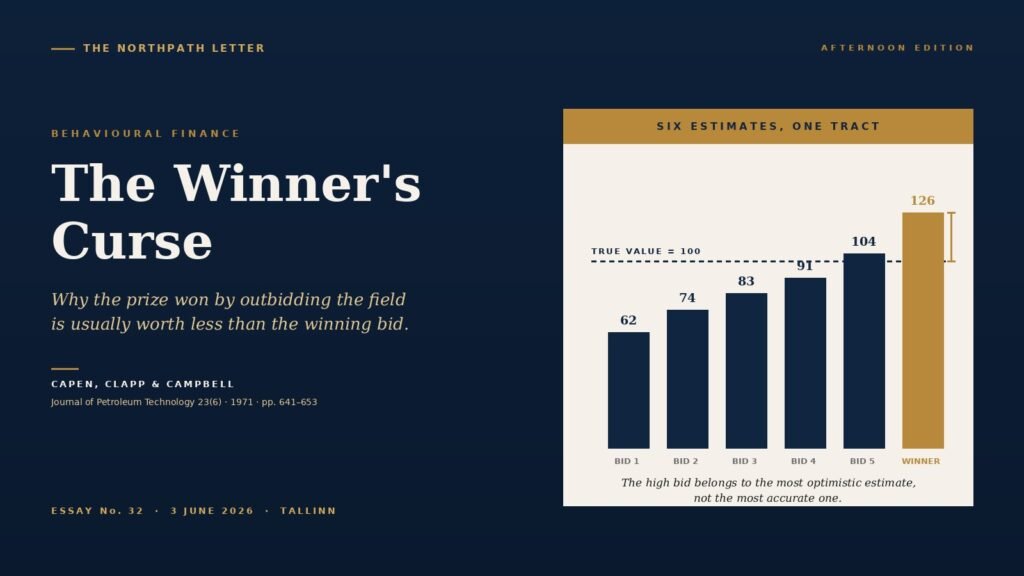 In 1971 three Atlantic Richfield engineers showed why the winner of an oil-lease auction is usually the bidder who most overestimated the tract. The same selection-by-maximum haunts hot listings, contested takeovers and crowded trades — and it can be disciplined.
 - Who Audits the Auditors: India’s NFRA, the ICAI, and the Surrogate Big Four
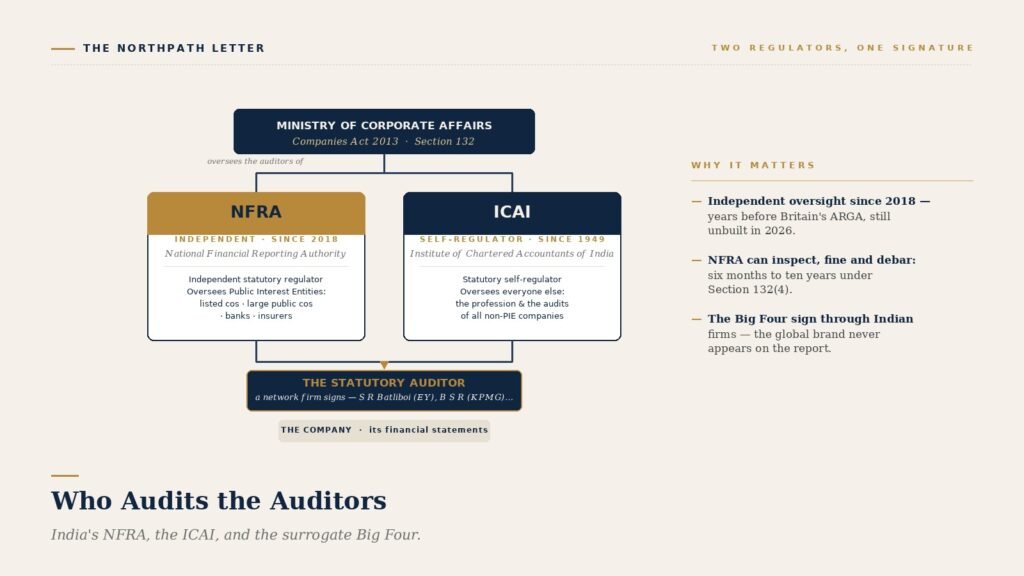 India built an independent audit regulator in 2018 — years before Britain managed it. A field guide to NFRA, the ICAI, statutory firm rotation, and the Indian network firms behind the Big Four.
 - Cash as a Position: Seth Klarman’s 1991 Doctrine That a Cash Balance Is the Residual of Bottom-Up Discipline, Not a Market-Timing Call
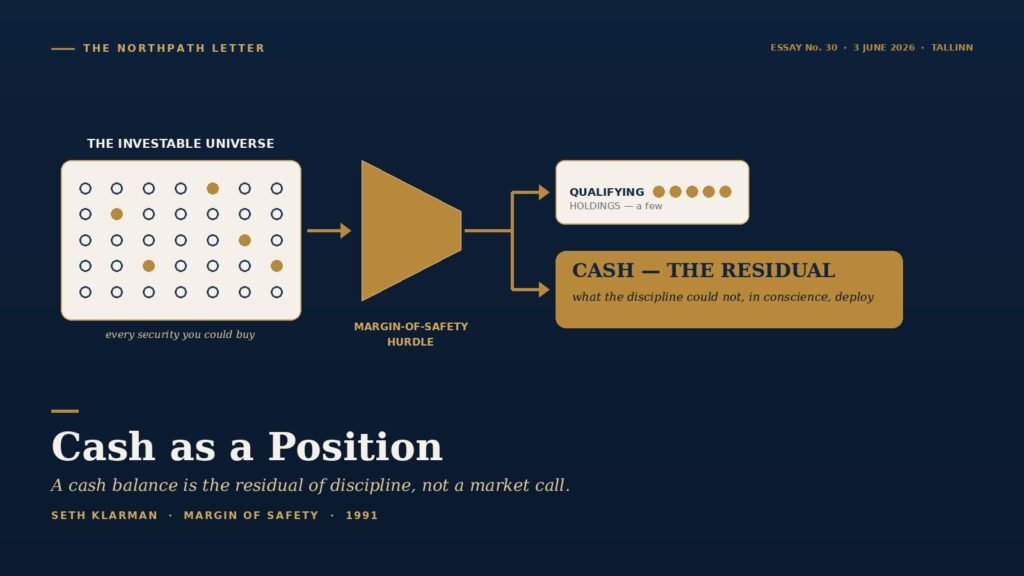 Seth Klarman’s 1991 argument that a cash balance is the residual of refusing to overpay, never a market call. The discipline of letting the opportunity set, not the index, set your cash: its real cost, its option value in a panic, and how Klarman, Buffett and Eveillard lived it.
The NorthPath Letter · Free
Subscribe to The NorthPath Letter
Long-form strategic analysis of global businesses and capital markets, delivered to your inbox. Free, weekly, no spam — unsubscribe anytime.